April 11, 2014

Nokia Morph Concept

The Morph Concept 

Launched alongside The Museum of Modern Art “Design and The Elastic Mind” exhibition, the Morph concept device is a bridge between highly advanced technologies and their potential benefits to end-users. This device concept showcases some revolutionary leaps being explored by Nokia Research Center (NRC) in collaboration with the Cambridge Nanoscience Centre (United Kingdom) – nanoscale technologies that will potentially create a world of radically different devices that open up an entirely new spectrum of possibilities.
Morph concept technologies might create fantastic opportunities for mobile devices:
  • Newly-enabled flexible and transparent materials blend more seamlessly with the way we live
  • Devices become self-cleaning and self-preserving
  • Transparent electronics offering an entirely new aesthetic dimension
  • Built-in solar absorption might charge a device, whilst batteries become smaller, longer lasting and faster to charge
  • Integrated sensors might allow us to learn more about the environment around us, empowering us to make better choices
In addition to the advances above, the integrated electronics shown in the Morph concept could cost less and include more functionality in a much smaller space, even as interfaces are simplified and usability is enhanced. All of these new capabilities will unleash new applications and services that will allow us to communicate and interact in unprecedented ways.
Flexible & Changing Design
Nanotechnology enables materials and components that are flexible, stretchable, transparent and remarkably strong. Fibril proteins are woven into a three dimensional mesh that reinforces thin elastic structures. Using the same principle behind spider silk, this elasticity enables the device to literally change shapes and configure itself to adapt to the task at hand.
A folded design would fit easily in a pocket and could lend itself ergonomically to being used as a traditional handset. An unfolded larger design could display more detailed information, and incorporate input devices such as keyboards and touch pads.
Even integrated electronics, from interconnects to sensors, could share these flexible properties. Further, utilization of biodegradable materials might make production and recycling of devices easier and ecologically friendly.
Self-Cleaning
Nanotechnology also can be leveraged to create self-cleaning surfaces on mobile devices, ultimately reducing corrosion, wear and improving longevity. Nanostructured surfaces, such as “Nanoflowers” naturally repel water, dirt, and even fingerprints utilizing effects also seen in natural systems.
Advanced Power Sources
Nanotechnology holds out the possibility that the surface of a device will become a natural source of energy via a covering of “Nanograss” structures that harvest solar power. At the same time new high energy density storage materials allow batteries to become smaller and thinner, while also quicker to recharge and able to endure more charging cycles.
Sensing The Environment
Nanosensors would empower users to examine the environment around them in completely new ways, from analyzing air pollution, to gaining insight into bio-chemical traces and processes. New capabilities might be as complex as helping us monitor evolving conditions in the quality of our surroundings, or as simple as knowing if the fruit we are about to enjoy should be washed before we eat it. Our ability to tune into our environment in these ways can help us make key decisions that guide our daily actions and ultimately can enhance our health.
Press Material

How nanotechnology could let you go months without having to charge up your mobile

No need to hang up: New research involving nanotechnology could mean mobile phone batteries lasting months between chargesA flat battery on your mobile phone can leave you in a sticky situation, but new research could mean you might go months without charging it.
A team of electrical and computer engineers at an Illinois university may have solved the problem by using ‘nanotubes’ – carbon tubes 10,000 times smaller than a human hair.
The scientists replaced the metal wiring in mobile devices’ batteries with the nanotubes and believe the changes could extend battery life by up to 100 times.
No need to hang up: Research involving nanotechnology could mean mobile phone batteries lasting months between charges
‘I think anyone who is dealing with a lot of chargers and plugging things in every night can relate to wanting a cell phone or laptop whose batteries can last for weeks or months,’ said Eric Pop of the Beckman Institute for Advanced Science and Technology.
Mr Pop claims his team’s research could one day mean a mobile device like an iPhone could see hugely extended battery life, possibly to the point that it could run by harvesting thermal or solar energy rather than relying on a battery.
The research could also prove groundbreaking for devices much larger than mobile phones or portable computers.
‘We're not just talking about lightening our pockets or purses,’ Mr Pop explained.
‘This is also important for anything that has to operate on a battery, such as satellites, telecommunications equipment in remote locations, or any number of scientific and military applications.’
The group believe their latest study is just the beginning for improving battery life and hope to make devices’ power consumption 1,000 times more efficient.
The findings, published in a report in the Science journal, come in the same week that Google admitted up to 260,000 smartphones had been hacked after handset users unwittingly downloaded virus-infected apps.
The threat came to light last week when the technology giant was forced to withdraw at least 50 apps from its official Android Market.
Tiny breakthrough: Nanotechnology, like this miniscule microchip photographed by Huddersfield University researchers, may extend battery life


April 06, 2014

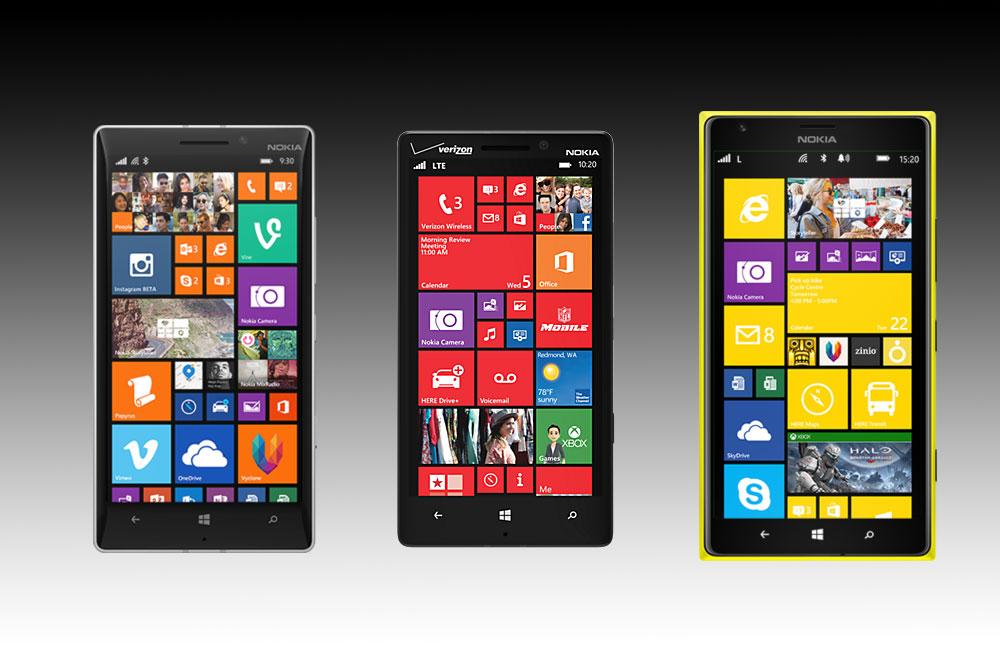
Lumia 930 vs. Lumia Icon vs. Lumia 1520: Here’s how Nokia stacks up against itself Read more: http://www.digitaltrends.com/mobile/nokia-lumia-930-vs-nokia-lumia-1520-spec-showdown/#ixzz2yB2txXUK Follow us: @digitaltrends on Twitter | digitaltrendsftw on Facebook

Lumia-Showdown-Header
Nokia continues to roll out additions to its Lumia line of Windows phones, with the newest offering — the Lumia 930 — bringing many of the same specs and features of previously-launched Lumia Icon to a wider range of networks and carriers. Although the 930 and the Icon are nearly identical, touting the same processor and internal hardware, the two smartphones differ in several keys specifics when compared side-by-side, or with the like-minded Nokia Lumia 1520. The 930 for instance, touts the Sensor Core motion processor for tracking steps and movement while sleeping, whereas the Icon and 1520 do not. However, different Lumia phones serve different users and purposes, and each Lumia device is designed as a well-rounded smartphone with no one, part
icular focus. Check our brief spec showdown below for a quick, side-by-side comparison of the three Nokia devices.
Additionally, take a look at our side-by-side comparison of the Lumia 930, Galaxy S5, and the iPhone 5S for a closer look at the competition.
 
Nokia Lumia 930
Nokia Lumia 930
Nokia Lumia Icon
Nokia Lumia Icon
Nokia Lumia 1520
Nokia Lumia 1520
Size137 x 71 x 9.8 (mm)137 x 71 x 9.8 (mm)162.8 x 85.4 x 8.7 (mm)
Weight167 grams167 grams209 grams
Screen5-inch OLED5-inch OLED6-inch IPS LCD
Resolution1920 x 1080 pixels1920 x 1080 pixels1920 x 1080 pixels
OSWindows Phone 8.1Windows Phone 8.0Windows Phone 8.1
Storage32 GB32 GB32 GB
SD Card SlotNoNoYes, MicroSD
ProcessorQualcomm Snapdragon 800Qualcomm Snapdragon 800Qualcomm Snapdragon 800
RAM2 GB2 GB2 GB
ConnectivityWi-Fi, 4G LTE, NFCWi-Fi, 4G LTE, NFCWi-Fi, 4G LTE, NFC
CameraFront 1280 x 960, Rear 20 MPFront 1280 x 960, Rear 20 MPFront 1280 x 960, Rear 20 MP
BluetoothYes, Version 4.0Yes, Version 4.0Yes, Version 4.0
Motion ProcessorSensor CoreNoNo
Fingerprint sensorNoNoNo
Water ResistantNoNo No
Battery2420 mAh2420 mAh 3400 mAh
ChargerQi WirelessQi WirelessQi Wireless
MarketplaceWindows Phone AppsWindows Phone AppsWindows Phone Apps
Ave. Price$599.00$199.99$549.00
AvailabilityJune in European marketsVerizon Wireless OnlyAT&T
DT ReviewComing soon3.5 out of 53.5 out of 5

Power and Productivity

All three Lumia phones are outfitted with Qualcomm Snapdragon 800 processors. The 800 has become a standard chip for newer mobile phones due to its power efficiency, solid performance and speed, and the decent feature set it provides. At 2.2GHz across four cores, users will have little trouble running the latest and greatest in Windows Phone apps.  All three phones feature a sufficient 2 GB of RAM, 4G LTE, NFC, and Wi-Fi, offering standard connectivity featured on most mobile devices. Out of the three, the only phone that has expandable memory is the 1520, with a MicroSD slot supporting up to 64GB of additional storage. For the Icon and 930, users will have to settle for the 32GB of internal storage. Additionally, the Lumia 930 touts the aforementioned Sensor Core for lower-power motion sensing when used in conjunction with Bing Health and Fitness, among other utilities. Neither the Icon or 1520 feature a motion processor of any kind.

Design

While all the displays run at a native 1920 x 1080 pixels, the 1520 adds an extra inch of real estate, while switching from OLED to IPS LCD technology. All three phones also feature a slightly curved back panel, rendering them more comfortable to hold as well as preventing the speaker from being muffled when the devices rests on a flat surface. All three phones bear the unmistakable, brightly-colored palette of the Lumia line, though the 930 has a new bright-green design. Moreover, Qi Wireless compatibility makes charging wireless and easy, and users can charge all three Lumia phones via the Nokia Fatboy pillow.

Camera

Again, we see the striking similarities between the camera sensors adorning all three devices. Each boasts a 20-megapixel sensor built into the rear, and Nokia does an excellent job of equipping the sensors with high-quality optics and solid software. The front sensor captures 1280 x 960 pixel resolution images, meaning it’s on the tail-end of smartphone cameras and really only good for checking to make sure your hair looks okay and the occasional video chat check-in. However, none of the phones will disappoint if Instagram and Facebook are your only image outputs, and though it depends on the model, they may even hold up against a standard point-and-shoot camera.

Conclusion

All three of these Lumia phones are remarkably similar, with differences in availability and screen size being major deciding factors. The 1520 has a slightly larger screen and the option for expandable storage, but the larger size may not be what some users are looking for, since it’s a good deal larger than most smartphones. If the Icon or 930 seem more in tune with your style, the choice is basically dictated by your carrier. The Icon is currently a Verizon exclusive, while the 930 will soon launch in Europe, the Middle East, and India with a global launch following soon afterward. We expect it will come to AT&T, Sprint, and possibly T-Mobile as well.

Nokia Lumia 930 hands-on review

THE LAUNCH of the Nokia Lumia 930 came just moments after Microsoft detailed its Windows Phone 8.1 update, making it one of the first smartphones to arrive running the operating system. 
The Lumia 930 is the spiritual successor to last year's Nokia Lumia 925, and it hasn't seen just software upgrades. There's also a larger 5in HD 1080 screen, an upgraded quad-core processor and a 20MP rear-facing camera, complete with Carl Zeiss optics and optical image stabilisation.
We got our hands-on the Nokia Lumia 930, to see how it stacks up against the competition.
Design
The Nokia Lumia 930 is not a compact device. The handset measures 137x71x9.8mm and tips the scales at 167g, which means that the Lumia 930 won't slip easily into a skinny jeans pocket. However, we found that we liked the handset's design and feel, with the aluminium edging adding to its overall robust impression.
Nokia Lumia 930 design
Of course it wouldn't be a Lumia phone without a splash of colour, and the Lumia 930 will be available in vibrant orange and green models, which will certainly turn heads in the street. Nokia has opted for matte polycarbonate for the colourful casing rather than the shiny plastic often found on its Windows Phone devices, which means that it sits comfortably in the hand and likely won't be too prone to picking up fingerprints.
For the more conservative, the Nokia Lumia 930 will also be available in black and white models.
Screen
The Nokia Lumia 930 has a 5in 1920x1080 full HD 1080p display that we found crisp and bright during our hands-on time with the smartphone, and better than the full HD screen on the 6in Nokia Lumia 1520. 
Nokia Lumia 930 2
Thanks to its Clearblack display technology, Nokia boasts that the Lumia 930 offers 180 degree viewing angles, and the phone lived up to this during our time with it on Thursday at the launch event. However, we found the display quite reflective, and it struggled under bright fluorescent lighting. 
Performance and softwareUnder the bonnet, the Nokia Lumia 930 has a quad-core 2.2GHz Qualcomm Snapdragon 800 processor. While it's not Qualcomm's latest chip, the Snapdragon 801 found in the Galaxy S5 and Xperia Z2, we noticed no performance issues with the Windows Phone 8.1 smartphone. Scrolling through menus and opening apps was especially smooth, and the new Internet Explorer 11 browser appeared responsive. 
Perhaps the Nokia Lumia 930's biggest talking point is the fact that it arrives running Windows Phone 8.1, making it - along with the Lumia 630 and Lumia 635 handsets - among the first to arrive running Microsoft's latest mobile operating system.
Nokia Lumia 930 has a 5in 1080p HD screen
The first change we noticed is personalised backgrounds, with Microsoft allowing users to set custom wallpapers that appear behind translucent Live Tiles. While we found this a little "busy" at first, it does make Windows Phone 8.1 look much more personal than before, when users only had different colours or black to choose from. Another big addition is Action Center, a pull-down menu that clearly takes tips from the notifications menus found on iOS and Android.
We have yet to test all of the features of Windows Phone 8.1, but it also delivers Microsoft's Cortana personal assistant, WiFi Sense, Word Flow and enterprise additions.
Of course, all of Nokia's usual additions are also in place, including Here Maps, Nokia Music and the Finnish phone firm's custom camera applications. 
Camera
The Nokia Lumia 930 features a 20MP rear-facing camera, a huge improvement compared to the Lumia 925's 8MP snapper, but not quite as impressive as theNokia Lumia 1020's 41MP rear-facing camera.  
We're yet to put this camera fully through its paces, but early impressions suggest that it will produce images of similar quality to those taken on the Nokia Lumia 1520, a camera that impressed us due to its crisp and natural image-taking abilities. 
First impressionsWhile the Nokia Lumia 930 didn't immediately strike us as an exciting smartphone, our hands-on has convinced us otherwise, and we think that this could be the Finnish phone maker's most popular Windows Phone yet.
Not only is the screen the most impressive we've seen on a Nokia Lumia device, Microsoft's Windows Phone 8.1 mobile operating system adds features that people have been calling for, which means that people might be more open to switching from iOS, Android or even Blackberry.

Sony Experia Z2 camera Features...

5 reasons why you should get excited about the camera on Xperia Z2
The camera phone chock full of snappy power
Xperia Z2 from Sony delivers jaw-dropping performance by packing in advanced camera technology into a unbelievably thin frame.
But there's more to it than just a great deal of sharpness: Xperia Z2 offers a load of nifty features that bring your pictures and videos to life too
The 4K video recording function allows you to get sharp movies, and even if you don't have a UHD monitor you can use that extra detail to zoom in on the action through a 1080p screen.
The Creative Effects section of the camera offers the chance to enhance your snaps easily, and Timeshift video lets you speed up and slow down your home movies in HD to create great effects

Background de-focus is a hot topic in 2014's smartphones, and Sony's plugged in a msimple-to-use method of getting professional-quality shots with the slip of a finger – plus Vine is pre-installed too for some fun looped video.
But it's no fun just reading about features; instead, watch our video and get a real sense of why Xperia Z2 from Sony is going to be one of the leading camera phones of 2014.

Nest and 12 more technologies that will help you save the world

Nest and 12 more technologies that will help you save the world
Won't somebody think of the polar bears?

We all know that we need to abandon our wasteful ways and go completely green.
We also know that we won't, because humans rarely succeed in putting our long-term needs above out short-term convenience. Thankfully there's a middle ground between pretending climate change doesn't exist and abandoning our worldly possessions to live in trees and eat nothing but plants. If we all tried to be a bit greener, we could have a really big impact.
We're not recommending throwing everything in a skip and buying newer, more efficient devices and appliances - any energy savings would be dwarfed by the carbon footprint of making the things in the first place - but a few changes could make a big difference, not just to your environmental impact but to your wallet too.
Here's the hardware that can help.

1. Nest

Technology to save the planet
A fuel-saving smart thermostat like Nest cuts costs for you and emissions for the world
The all-singing, all-dancing Google-owned Nest thermostat promises to save energy by making your home heating smarter: it'll reduce the heating when you or the sun's out, and it'll calculate the optimum times and temperatures for your home.
It and similar devices such as Hive can make a big difference in the energy you use, delivering an equally large cut in your monthly bills.

2. Better boilers

There's no point in having a smart thermostat if your boiler's been around since the Dark Ages. Upgrading from an old G-rated boiler to a modern A+ one makes a huge difference: the former can be less than 70% efficient compared to 90-plus for an A+ one. That's a difference of around 1,200kg of CO2 each year - and once again you'll also feel the benefit in your bank balance for years to come.

3. Radiator boosters

If you have traditional metal radiators you'll know it takes ages to warm up your house. Radiator boosters are fans that sit on top of radiators and move the air more quickly, enabling you to turn the heating down sooner and use less energy as a result. If the radiators are on external walls, fitting foil panels can reduce heat loss, improving efficiency even more.

4. Energy monitors

Energy monitors don't do anything to directly reduce your energy usage, but they do help name and shame the worst offenders and identify whether something's on that shouldn't be.

5. Old games consoles

Technology to save the world
Older consoles like the Wii are considerably less power-hungry than the current generation
If you're an environmentally conscious gamer, stick with your old console: according to the US National Resources Defense Council, the PS4 andXbox One are considerably more power hungry than their predecessors.
Use the right device for the right applications too. For example, when watching TV, dedicated streamers such as Apple TVs and Chromecasts use considerably less energy than games consoles do.

6. LED bulbs

They're better, brighter and more affordable than ever, and the difference they make to a typical home's energy use is staggering: replace six halogen downlighters with the equivalent LEDs and you're dropping from 300W to 12W or less. With an LED bulb system such as Phillips Hue, you can even control your home's lighting from your iPad. Look for warm white bulbs if you don't like the blue tint of early LED lights.

7. Electric cars

Technology to save the world
Yes, they still ultimately use fossil fuels - but they aren't belching greenhouse gases into the air when you drive them. The sticker price is necessarily steep and they're still not much use outside cities, but if you have spare cash and a short commute an EV such as the BMW i3 will massively reduce your emissions.

8. Rechargeable batteries

Normal batteries are hugely wasteful, and they're a great example of how very small changes could have an enormous impact if everybody joined in.
The 2007 UNIROSS study of batteries' environmental impact found that rechargeable batteries had up to 32 times less impact on the environment than traditional ones: while a rechargeable battery has the same impact on climate change as a car driving 16km, a traditional battery is equivalent to 457km.
The study estimated that if all of Europe replaced disposables with rechargeables, the effect on climate change would be equivalent to 5 billion fewer kilometres driven by cars.

9. Apps

Why use battery powered devices at all? Your smartphone can be a remote control, sat-nav, camera, games console, TV streamer and music player, and manufacturers' constant battles to improve phones' battery life means they're becoming more and more energy efficient. The move to mobile computing helps too, because smartphones and tablets are generally less power hungry than PCs.

10. More efficient TVs and white goods

Dishwashers and tumble dryers are dreadfully dull, but watching the energy ratings when you shop for replacements pays off dramatically: at UK rates, an A+ dishwasher is £40 per year and an A-rated tumble dryer £180 per year cheaper to run than average.
There are big differences between TVs too, with LEDs using a fraction of the energy of big plasmas (although as you might expect, with all other things being equal bigger screens generally use more energy).
Have a look at www.sust-it.net to compare the energy costs of different devices: switching to more efficient home appliances could save 1,992kg of CO2 per year, which is a significant chunk off your energy bill.

11. Solar chargers

We admit that they're more useful in California than Cumbria, but if you've got the sunshine - and you shop around for the most efficient ones - then they can help reduce your energy footprint, if only slightly.

12. Ecobutton

Many standby savers fail to live up to the hype, often because we forget to use the remote to turn them off. But Which? found the Ecobutton power saver really did deliver on its promises - although any reasonably competent Windows user could achieve the same energy savings by tweaking Windows' power saving options. So maybe you should do that instead.

13. Energy efficient laptops

Tech to save the world
According to sust-it.net, the 1.3GHz 13-inch MacBook Air costs £0.85 per year to run and is responsible for 2.61kg of CO2 annually, while an HP Envy 15 costs £7.70 and chucks 23.03kg of CO2 into the atmosphere. Laptops are much better than desktops and all-in-ones: an HP Pavilion 23 costs £25.46 and generates 78.23kg of CO2, so it's practically driving a V8 to the Arctic and punching polar bears in the face.